
Sound Steps Two-Card Sound Pairing Concept
Digital concept · Not physically validated
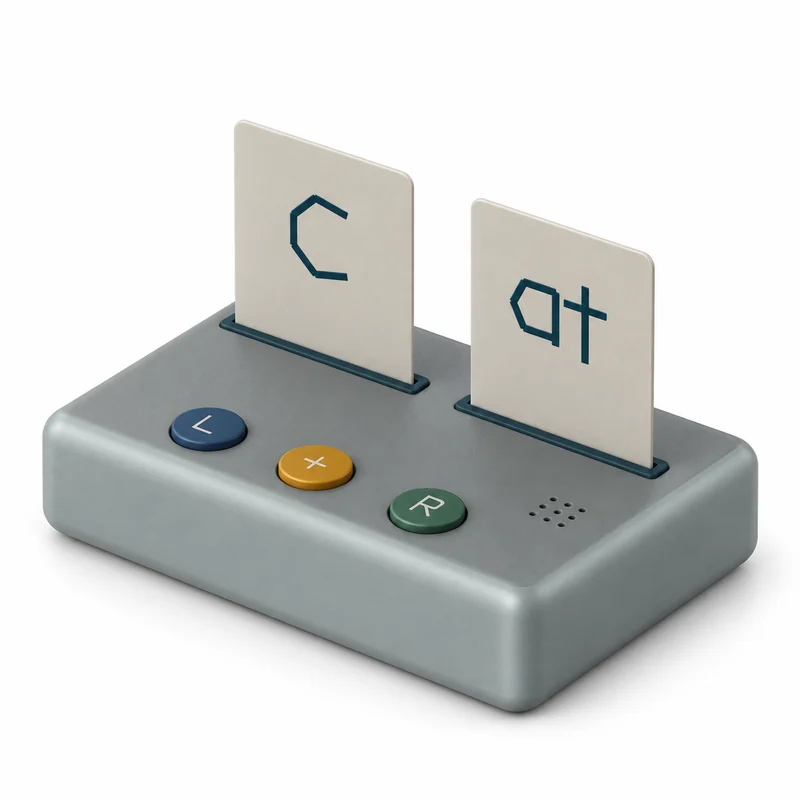
A proposed offline sound-pairing desk toy with two visible card positions and separate segment/replay actions. Coded original cards and a reviewed combination library are ideas for feasibility assessment, not a validated reading product.
Change one part and hear the pair
A proposed offline sound-pairing desk toy with two visible card positions and separate segment/replay actions. Coded original cards and a reviewed combination library are ideas for feasibility assessment, not a validated reading product.
Place two original cards
A left and right card are proposed to keep two word parts visible side by side.
Check the pair
The intended optical-code route would identify the card type and ID before looking up an approved combination.
Hear a part or the whole
Separate controls are proposed for replaying either part and a reviewed whole-word recording.
Change one part
Players can replace a card and compare the result. Unapproved pairs would receive a neutral prompt, not an invented pronunciation.
Two visible card positions
The proposed desk body separates two card positions from segment and whole-word playback controls. Original coded cards and a reviewed audio library are development inputs. Card detection, handling, content accuracy and physical fit remain unvalidated.
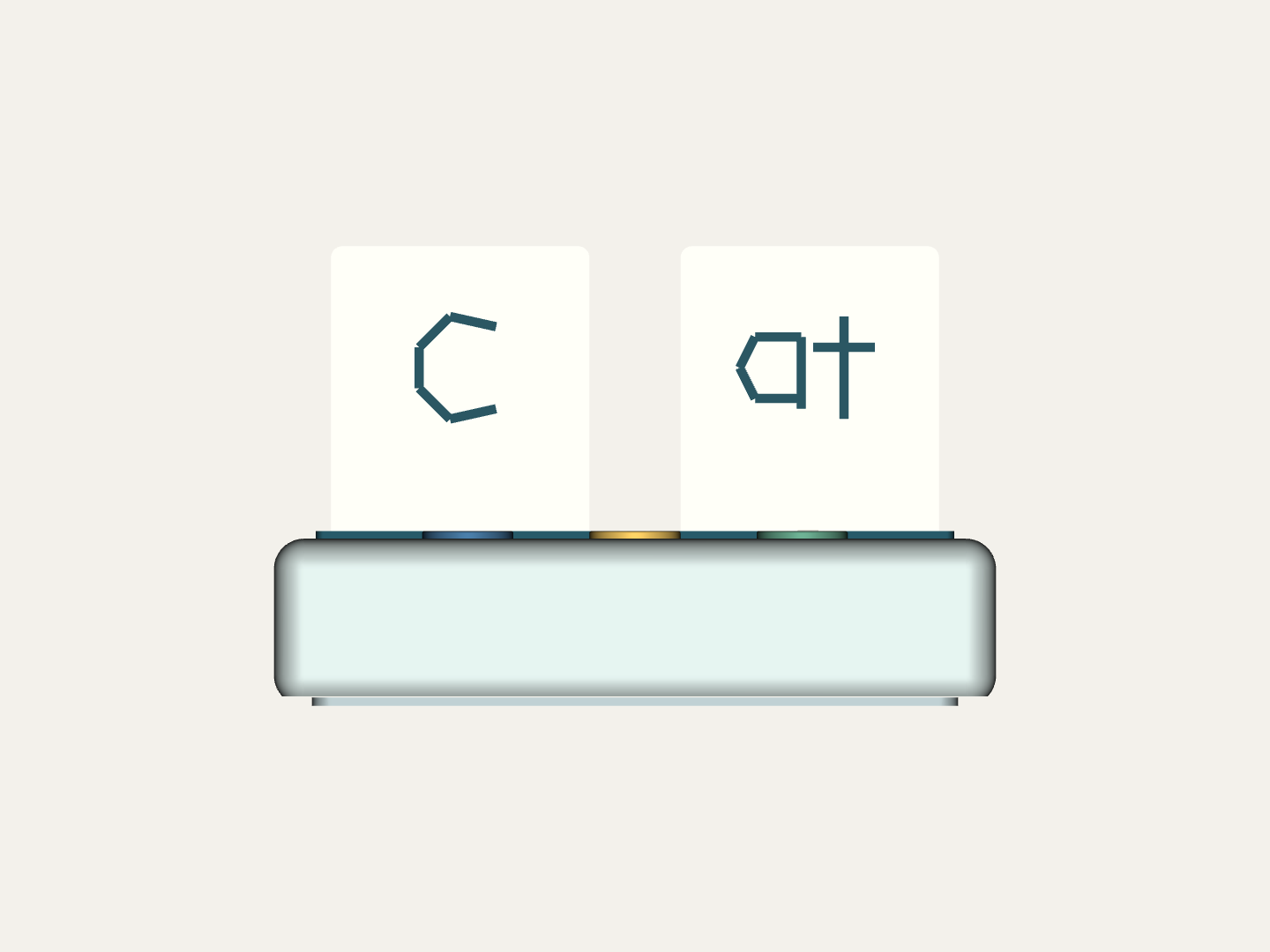
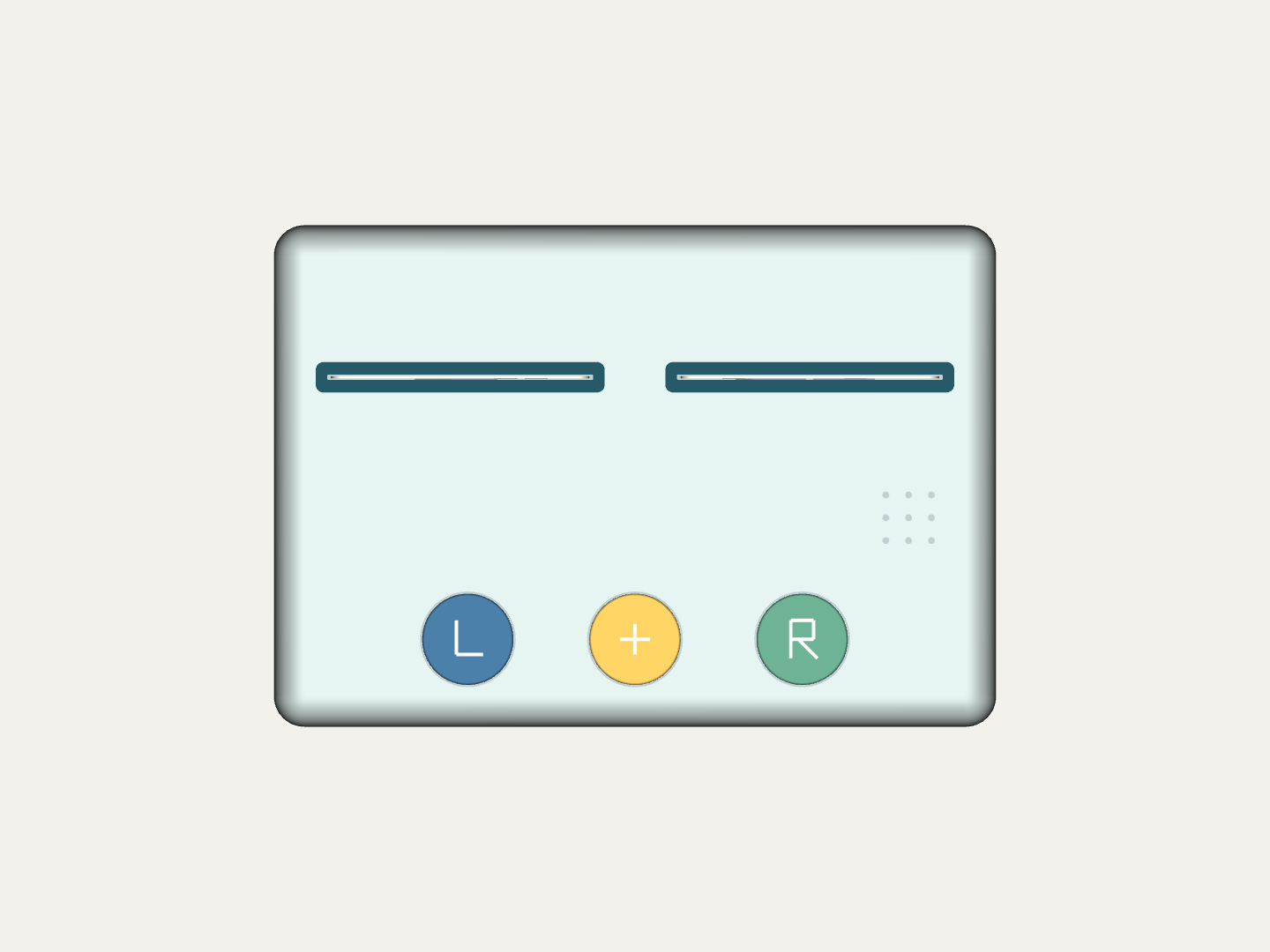
All views are digital concept images, not photographs of a physical prototype.
Proposed design inputs
| Form | Two-card tabletop dock; no electronic screen proposed |
|---|---|
| Card route | Original printed optical codes considered; not RFID or camera recognition |
| Audio | Reviewed stored combinations, not open-ended AI speech or pronunciation scoring |
| Controls | Left-part, right-part and whole-word playback actions |
| Indicative body | About190W×132D×44H mm; inserted cards increase the height to about121mm |
| Status | Optical, card, content and physical usability feasibility unvalidated |
A starting point for your product brief
Choose this direction as a reference, then define what your customers need. These are possible development discussions, not confirmed ready-made options.
Share your requirementsFrom an idea to a development decision
Agree the brief
Define the audience, sales market, intended experience, original content, changes and commercial constraints.
Check the experience
Use simple mock-ups and a full-size form model to assess the proposed task before committing to tooling or custom electronics.
Evaluate feasibility
Review real components or mechanisms, power where applicable, usability, structure and market-specific safety requirements.
Decide whether to develop
Agree scope, ownership, budget, prototype stages and validation responsibilities. Tooling and production assessment would be later decisions.
Questions about this concept
Does the concept use RFID cards?
No RFID route is proposed for the recommended direction. Printed optical codes are a candidate approach that still needs physical feasibility testing.
Will every pair make a spoken word?
No. The idea uses an approved combination list. Unknown or unsuitable pairs would not generate arbitrary speech.
Is this a tested phonics teaching product?
No. It is a digital product concept. Content suitability, age grading, usability and learning outcomes have not been validated.
Is this concept ready to order?
No. It is an original digital concept for review. Feasibility, physical prototypes, tooling, electronics and validation would need a separately agreed development project.
Can it be adapted for our brand or market?
Content, languages, appearance, audience and intended changes can be discussed. Feasibility, ownership, project scope, cost and market-specific safety work would need agreement.
What are the price, MOQ and lead time?
They have not been set. A meaningful quotation requires an agreed specification, prototype scope, feasibility review and supplier assessment.
Would this direction fit your product range?
Share your target market, intended users and changes. Begin with a concept review and a development brief.