
Your released design package
- Drawings & critical dimensions
- BOM & material specifications
- Functional & acceptance requirements
- Approved reference samples
ODM & OEM / MANUFACTURE YOUR CUSTOMER-OWNED DESIGN
OEM manufacturing turns your approved drawings, BOM and specifications into a controlled production run.
Start here when the product design is established and you need manufacturing execution at Xinyinhai: tooling preparation, materials, process instructions, assembly, inspection and release. We review production readiness before committing the design to the line.
01 / PRODUCTION TRANSFER
A readiness review reconciles the files, physical reference and acceptance requirements before materials or tooling are committed.
Confirm that the drawings, BOM, electronic specification and reference sample describe the same product. Identify critical dimensions, material requirements and any characteristics that cannot be checked from appearance alone.
Review molding, electronic assembly, finishing, final assembly and packing as applicable. Confirm access for assembly and inspection, tooling requirements and fixture needs. Record gaps before accepting the production package.
Agree the test methods, conditions and pass criteria for the product and intended market. Mark the reference sample and document permitted variations. An attractive sample alone cannot define the production acceptance standard.
02 / TOOLING & MATERIALS
Tool readiness and material definition determine whether the approved design can be reproduced under the proposed production conditions.
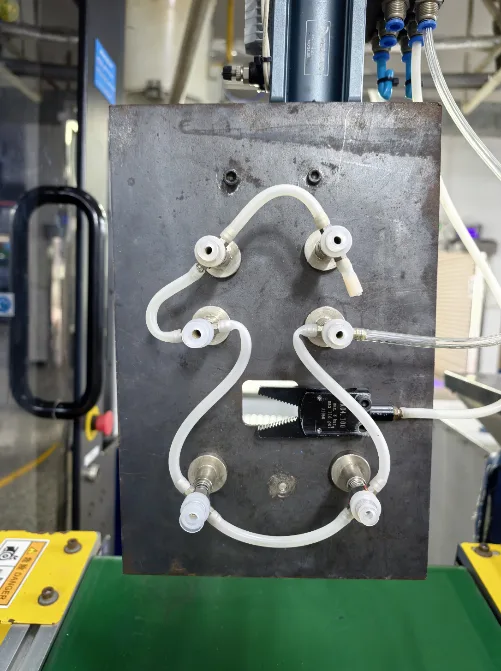
For new production tooling or a transferred mold, confirm the tool scope, condition and agreed part requirements. Review mold and machine fit, ejection and the resulting first articles. Track trial issues and approved corrections before accepting the tool for the planned run.
Document who owns the tool, who may use it and the maintenance and transfer arrangements. Customer-specific tooling is not a source of unrestricted products for other buyers.
Review tooling and injection molding ↗
Use approved material and component information to guide procurement and incoming inspection. Review identity, specification, condition and required safety information; keep nonconforming incoming parts from entering the production flow.
Material grades, electronic parts, finishes and packaging substitutions can change performance. Evaluate the change and its verification needs before replacing an approved item.
Review incoming inspection ↗03 / MANUFACTURING EXECUTION
The manufacturing package connects each operation to a work instruction, a check and an escalation route when the result is outside the agreed criteria.
Xinyinhai’s documented OEM route uses the reviewed product specification and confirmed sample to prepare the applicable process documents. The bill of materials (BOM), drawings (DWG), operating instructions (SOP) and inspection instructions (SIP) are reviewed, approved and distributed as controlled versions. Proposed changes return through the agreed review and authorization route.
Release approved materials.
Verify parts and tooling.
Follow controlled instructions.
Apply agreed acceptance checks.
Confirm packing and shipment.
| Control point | Execution focus | Review evidence |
|---|---|---|
| Incoming materials | Check purchased parts and materials against the approved specification before release to production. | Incoming inspection results, material status and disposition of nonconforming items. |
| Molding and part preparation | Confirm trial conditions, molded-part fit, appearance and critical dimensions before downstream assembly. | Approved first articles, controlled dimensions and relevant process instructions. |
| Electronics and interconnection | Apply the agreed component, polarity, wiring and functional requirements; protect parts and connections during handling. | Electronic inspection points and functional checks defined for the product. |
| Assembly and fixtures | Verify assembly order, positioning, fastening and fixture operation using production work instructions. | SOP and fixture review, assembly checks and identified abnormal conditions. |
| Testing and in-process quality | Check function, appearance and applicable safety characteristics at the specified process points. | Test and inspection records, issue analysis and verified corrective action. |
| Packing and release | Reconcile the product, approved sample, labels, packaging and shipment requirements. | Final inspection results and a recorded shipment-release decision. |
On smaller screens, scroll the table to see every column.
Testing is selected for the product and its use. Review the product testing framework when agreeing the plan; the existence of a test method is not a certificate or a statement that every product requires that test.
04 / PILOT TO MASS PRODUCTION
PP is the pre-production pilot; MP is mass production. A successful prototype or mold trial does not by itself establish that the assembled production process is ready.
Use the approved material set, work instructions, fixtures and packing requirements. Engineering and production support the line while quality monitors the result.
Review assembly problems, fixture reliability, product checks, packaging and production feasibility. Assign actions for failures and verify the corrections before closing them.
Confirm the agreed sample, current drawings and BOM, instructions, test results and readiness decision. Obtain the customer approvals required by the project before releasing mass production.
Use the released baseline for the next run. Communicate abnormalities and assess changes to materials, tooling or process conditions. Verify affected characteristics when the baseline changes.
MATERIAL RESPONSIBILITIES
The sourcing plan distinguishes purchased components from customer-supplied materials and defines the controls each needs.
Purchasing requirements refer to the approved BOM, drawings or order specification, with applicable inspection criteria and packaging requirements. Where sample confirmation is required, record it before authorizing supply.
Purchasing communicates revised technical files and inspection standards to affected suppliers. Changes to purchase requirements are approved and confirmed with the supplier.
Xinyinhai’s documented storage procedure identifies customer-supplied materials and keeps separate stock records to prevent use for another customer's product. Receipt checks follow the agreed customer instructions or the applicable incoming-inspection procedure.
Suitable storage, protection and separation preserve the materials while they are in factory custody. Agree identification, inspection and handling requirements before sending them.
Review Traceability & Materials for receipt, issue and material-status records, and Xinyinhai’s quality management system for supplier and document controls.
PROJECT OUTPUTS
Agree the applicable deliverables, their revision and approval owner in the project scope. The output must support the next decision.
Confirm the scope and acceptance criteria before authorizing the next stage.
A manufacturing-readiness review identifying missing inputs, process constraints and decisions needed.
An agreed tooling and production preparation scope, including any separately approved engineering changes.
A production control plan connecting incoming materials, work instructions, fixtures and inspection points.
Pilot findings and corrective actions, with approval status for samples and production documents.
The agreed production inspection and release records, with traceable revisions and outstanding restrictions.
BUYER QUESTIONS
Start with your current product information and the decision you need to make.
The drawings, BOM, functional requirements, materials and acceptance criteria should define what must be built and how it will be accepted. A sample is useful but may not specify hidden materials, tolerances or software behavior. We review the package and identify gaps before agreeing the production scope.
A sample can start a review, but it is not automatically a production-ready specification. Reconstructing geometry, determining materials or developing electronics involves engineering work and authorization to use the design. We identify that work separately and may recommend Product Adaptation or New Product Development before manufacturing.
The approved customer design remains the manufacturing baseline. A manufacturability review may identify a necessary change, but it does not authorize that change. We document the proposed revision, its effect on tooling, validation, cost and schedule, and obtain agreement before implementation.
Transfer is assessed against ownership or permission, mold condition, available drawings, machine compatibility and the intended materials. Tool trials and first-article checks establish whether the transferred tool can meet the agreed requirements. Custody, maintenance, permitted use and eventual transfer arrangements are documented for the project.
A mature design may still be new to the receiving production line. A pilot checks actual materials, fixtures, instructions, assembly methods and inspection effectiveness together. It can reveal process problems that a previously approved design sample cannot. Pilot scope and release conditions depend on the transfer risks.
The design revision, tooling condition, material availability, process route, quantities, packaging and required verification determine the quotation and plan. Missing approvals and engineering changes can affect both. We confirm these dependencies for the specific project rather than applying a universal minimum order or lead time.
Agree the material identity, receipt checks and protection requirements before shipment to the factory. Xinyinhai’s documented storage procedure calls for customer-material identification, separate stock records and appropriate protection and separation to prevent use for another customer. Receipt inspection follows the customer requirements where specified, or the applicable incoming-inspection procedure.
YOUR NEXT STEP
Identify the current revision, intended market and planned quantities. Mark missing documents or unresolved decisions so the readiness review can separate production preparation from additional design work.
Use the inquiry form to prepare your brief, or share it through your existing project contact. Agree a confidential exchange before sending restricted drawings, code or customer information. Downloading a brief does not submit a project.