

RoutineRail Visual Routine Timer Concept
Digital concept · Not physically validated
A proposed offline routine timer that pairs three physical activity stages with a colour time display. A digital direction for shared routines and customer development review, without a companion app in the proposed first version.
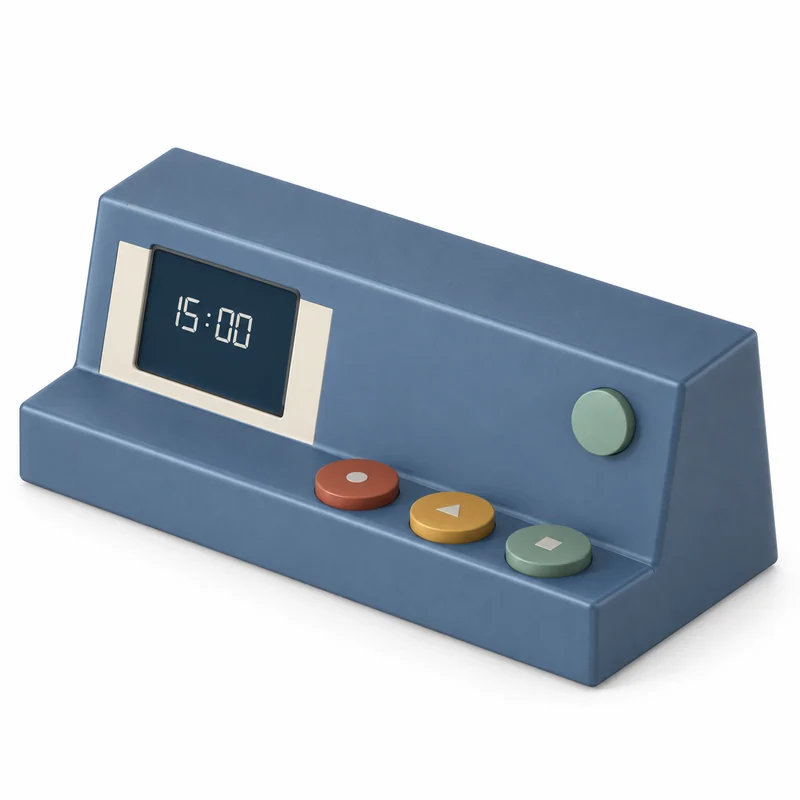
Make the next stage visible together
A proposed offline routine timer that pairs three physical activity stages with a colour time display. A digital direction for shared routines and customer development review, without a companion app in the proposed first version.
Prepare three stages
An adult would define the activity sequence and time intervals.
Choose the current activity
A physical stage button would identify the current step.
See and pause the interval
The screen would show time and state; an intentional pause would interrupt the countdown.
Move on together
Players would confirm the next stage, rather than have the device silently advance.
Three physical stages beside a time display
The proposed tabletop rail puts three activity stages alongside a colour time display and deliberate controls. Original stage graphics, pause behaviour and progression would be reviewed with intended users. The concept has no validated behavioural or learning benefit.
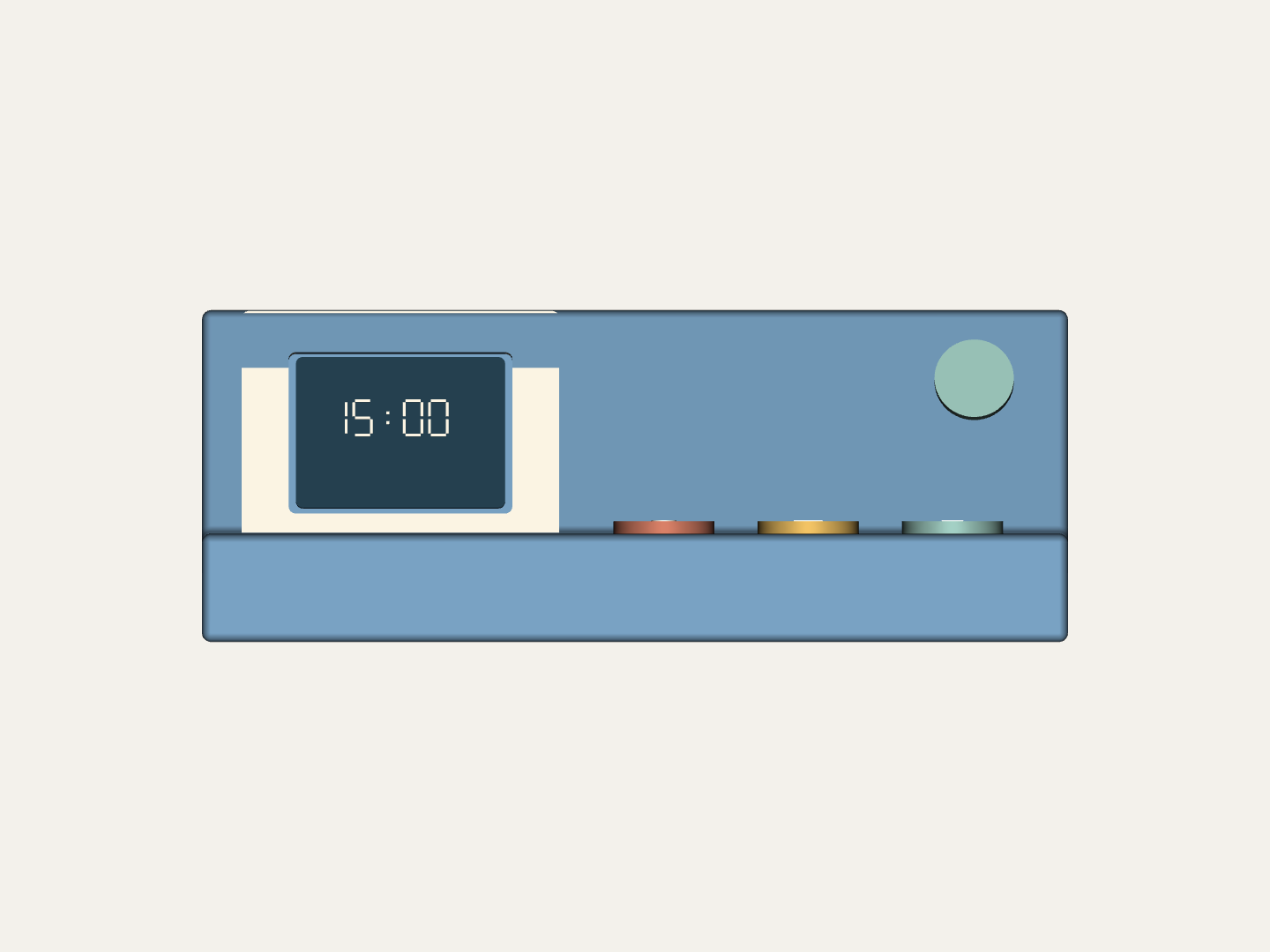
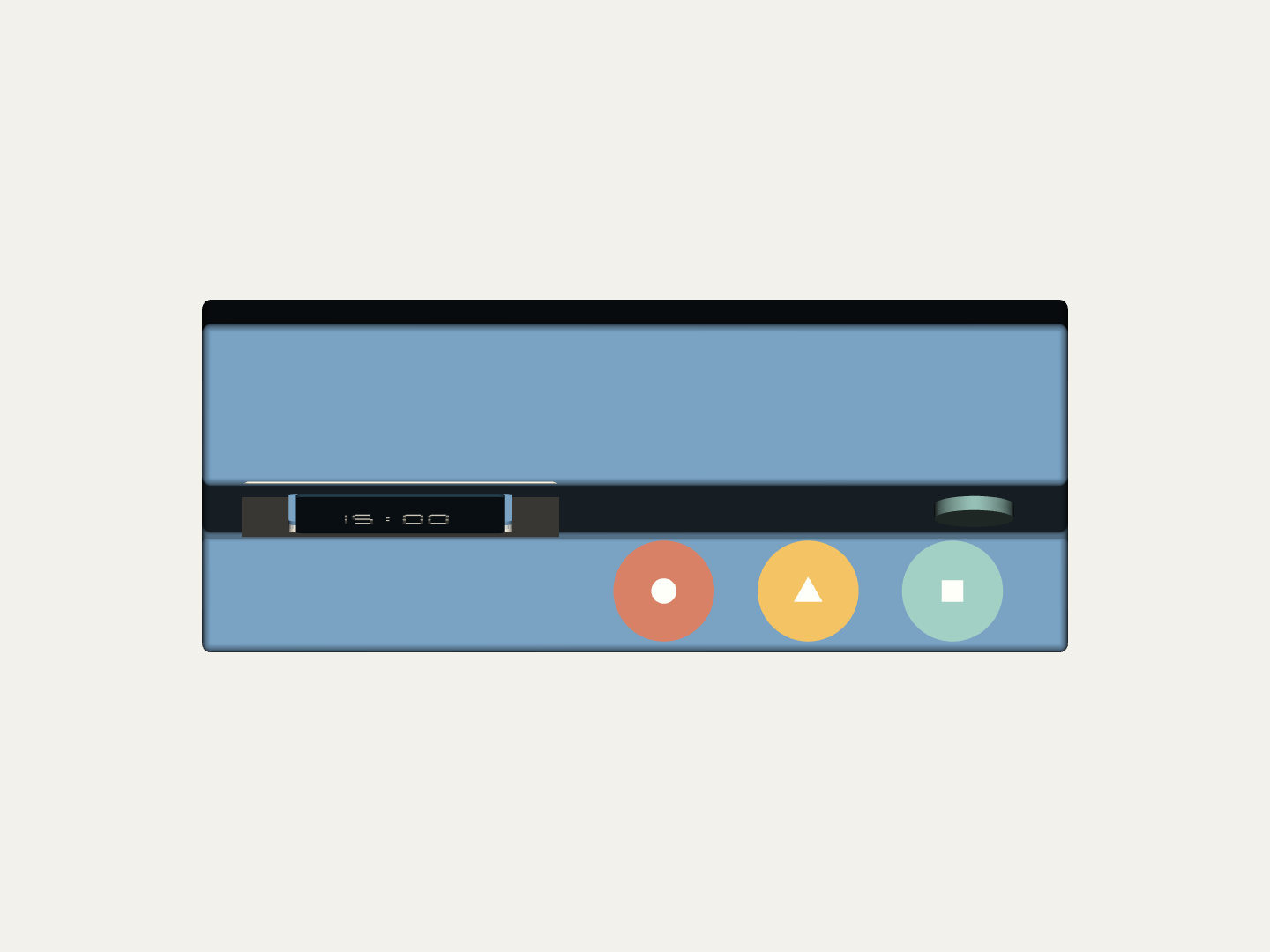
All views are digital concept images, not photographs of a physical prototype.
Proposed design inputs
| Format | Three-stage tabletop routine and interval timer |
|---|---|
| Display | Landscape colour screen with shape and position cues |
| Controls | Three stage buttons and an adult setup dial |
| Connection | Offline proposed first version; no app |
| Power | Replaceable 3-AA arrangement proposed |
| Concept envelope | Approximately 240 W × 92 H × 98 D mm |
A starting point for your product brief
Choose this direction as a reference, then define what your customers need. These are possible development discussions, not confirmed ready-made options.
Share your requirementsFrom an idea to a development decision
Agree the brief
Define the audience, sales market, intended experience, original content, changes and commercial constraints.
Check the experience
Use simple mock-ups and a full-size form model to assess the proposed task before committing to tooling or custom electronics.
Evaluate feasibility
Review real components or mechanisms, power where applicable, usability, structure and market-specific safety requirements.
Decide whether to develop
Agree scope, ownership, budget, prototype stages and validation responsibilities. Tooling and production assessment would be later decisions.
Questions about this concept
Is this an existing physical product?
No. This is an original digital concept for review. No physical prototype, mould tooling, custom PCB or physical validation has been completed.
Are the proposed functions and dimensions verified?
No. They are design starting points for a development brief. Real components, usability, materials, safety and performance need evaluation.
Can this be adapted for our project?
Audience, appearance, interaction and applicable content can be discussed. Feasibility, ownership, scope, cost and validation responsibilities need agreement before development.
Would this direction fit your product range?
Share your target market, intended users and changes. Begin with a concept review and a development brief.