

Quiz Compass Audio Quiz Game Concept
Digital concept · Not physically validated
An offline audio quiz concept with three clear answer buttons and a separate replay control. A compact tabletop direction for shared questions and short turns, presented as a digital idea for customer review.
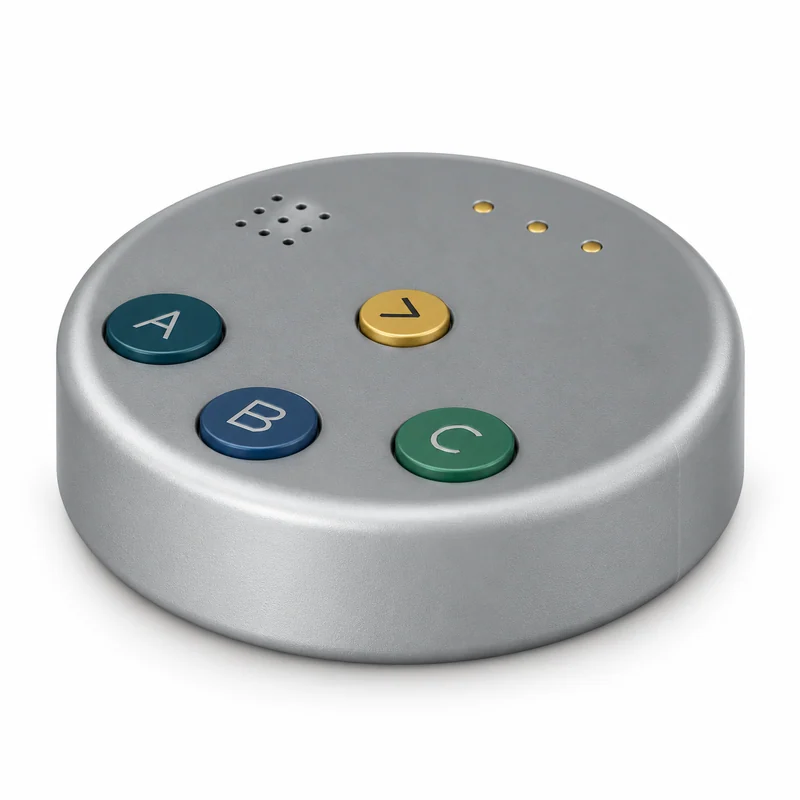
Listen to a question and choose a response
An offline audio quiz concept with three clear answer buttons and a separate replay control. A compact tabletop direction for shared questions and short turns, presented as a digital idea for customer review.
Choose a theme
An adult or player selects one of the proposed question themes.
Listen to a short question
The proposed device reads a question and three concise options from a reviewed offline content pack.
Choose an answer
Players press one of three buttons. A stored answer table, rather than speech recognition, determines the response.
Hear and take turns
A short explanation and the next question support shared turns; replay remains a dedicated action.
Three answers and a separate replay control
A low circular tabletop body separates three answer buttons from a replay control. Spoken prompts and a stored answer table are proposed for offline rounds. Button differentiation, content correctness, sound exposure and shared use remain unvalidated.
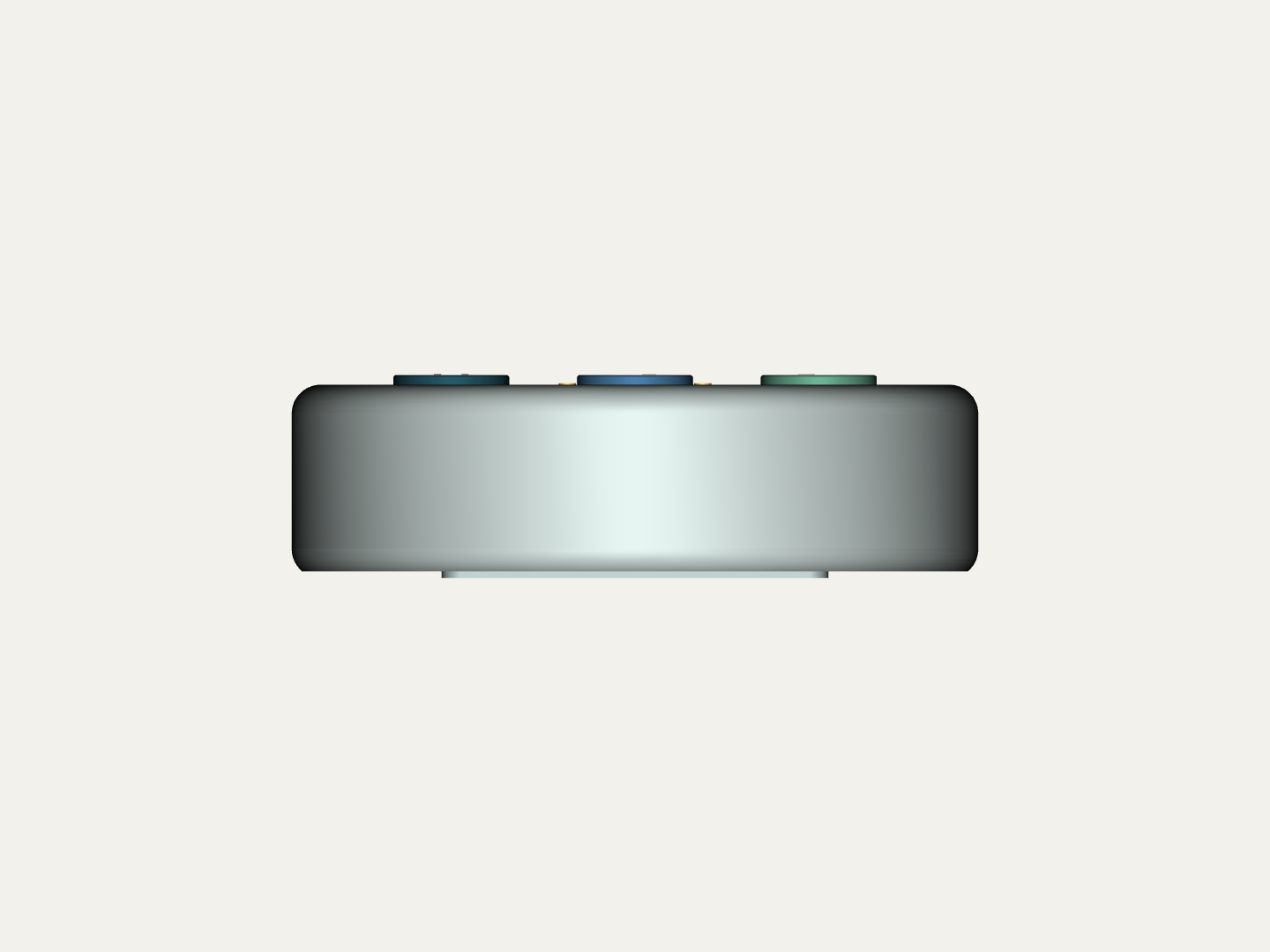
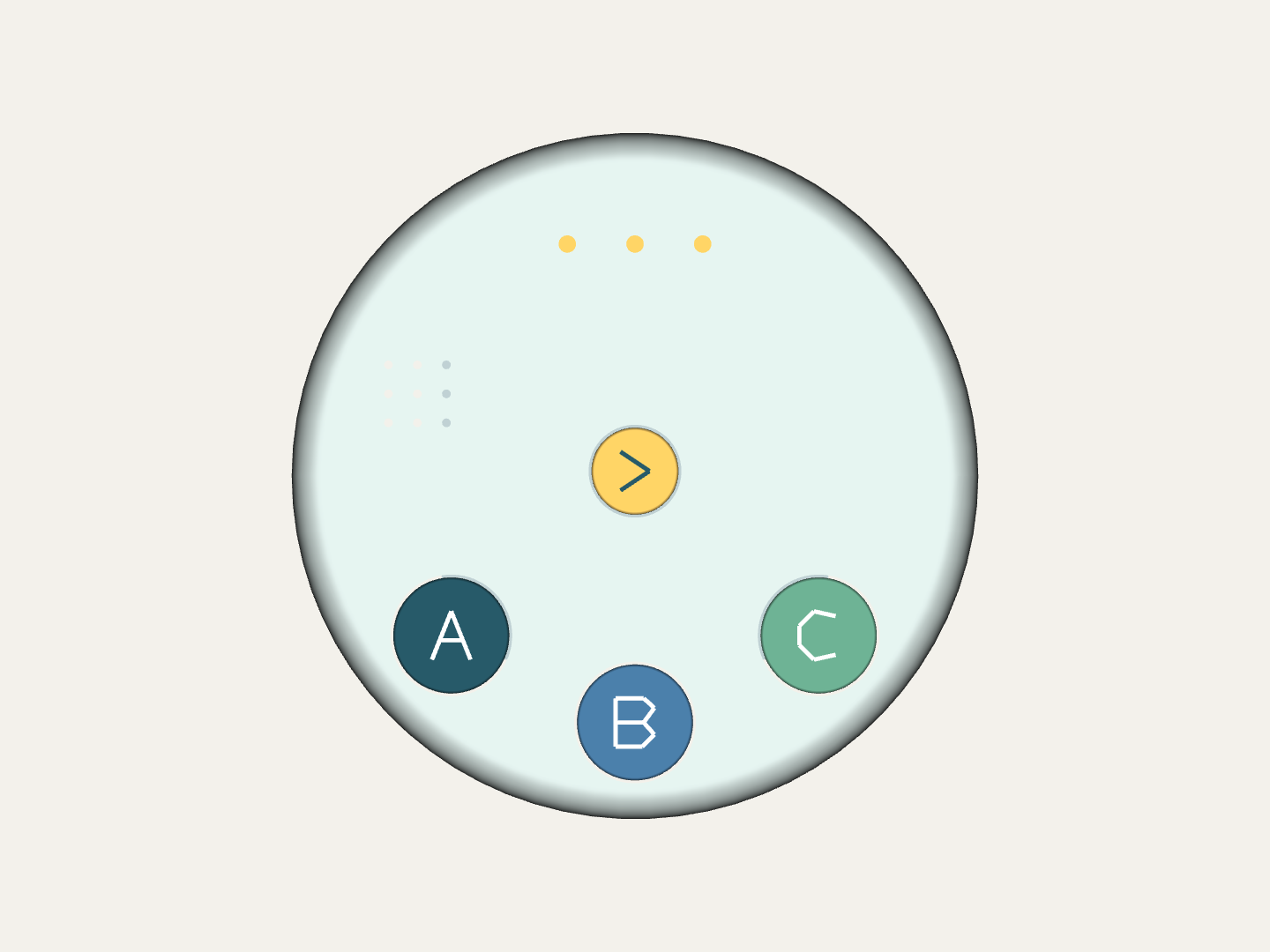
All views are digital concept images, not photographs of a physical prototype.
Proposed design inputs
| Form | Low circular tabletop body with short hand-held use considered |
|---|---|
| Controls | Three answer buttons plus a separate replay/pause control |
| Content route | Small reviewed audio packs; final content and languages to be developed |
| Operation | Offline; no microphone, camera or wireless route proposed |
| Indicative body | About142mm diameter; design dimensions, not verified specifications |
| Audience | Exploratory family/early-primary direction; final age grading not established |
A starting point for your product brief
Choose this direction as a reference, then define what your customers need. These are possible development discussions, not confirmed ready-made options.
Share your requirementsFrom an idea to a development decision
Agree the brief
Define the audience, sales market, intended experience, original content, changes and commercial constraints.
Check the experience
Use simple mock-ups and a full-size form model to assess the proposed task before committing to tooling or custom electronics.
Evaluate feasibility
Review real components or mechanisms, power where applicable, usability, structure and market-specific safety requirements.
Decide whether to develop
Agree scope, ownership, budget, prototype stages and validation responsibilities. Tooling and production assessment would be later decisions.
Questions about this concept
Does it recognise spoken answers?
No speech recognition is proposed. Players choose from three physical buttons and a stored answer table.
Why is there no electronic screen?
The initial direction focuses on listening and shared turns. Whether that makes questions easier to use must be tested with mock-ups.
How many questions are included?
No final commercial content pack exists. The internal concept uses a small seed-library scenario; actual content and languages would be agreed during development.
Is this concept ready to order?
No. It is an original digital concept for review. Feasibility, physical prototypes, tooling, electronics and validation would need a separately agreed development project.
Can it be adapted for our brand or market?
Content, languages, appearance, audience and intended changes can be discussed. Feasibility, ownership, project scope, cost and market-specific safety work would need agreement.
What are the price, MOQ and lead time?
They have not been set. A meaningful quotation requires an agreed specification, prototype scope, feasibility review and supplier assessment.
Would this direction fit your product range?
Share your target market, intended users and changes. Begin with a concept review and a development brief.