

Picture Harbor Turning Picture Drum Concept
Digital concept · Not physically validated
A single-piece tabletop audio concept with a manually turned, six-face picture drum behind a fixed window. It explores an alternative to loose picture cards, with a clear trade-off in content capacity.
28-second rendered 3D concept interaction with English captions. Proposed use only; not footage of a physical prototype.
Turn a picture, then listen together
A single-piece tabletop audio concept with a manually turned, six-face picture drum behind a fixed window. It explores an alternative to loose picture cards, with a clear trade-off in content capacity.
Turn to a picture
A large manual side control is proposed to bring one of six original picture faces into the fixed window.
Settle the position
An internal absolute-position code would link the visible face to its approved recording; transition positions would not trigger random audio.
Replay or change language
Two controls are proposed for replaying the current face and selecting an agreed language version.
Take another turn
Turn the drum to explore another picture. The proposed mechanism is manual, without a drive motor or loose picture cards.
A picture drum within one tabletop body
A manually turned six-face picture drum sits behind a fixed viewing window. The proposed body combines a stable foot and separate replay and language controls. Position sensing, detents, access and pinch clearances remain untested.
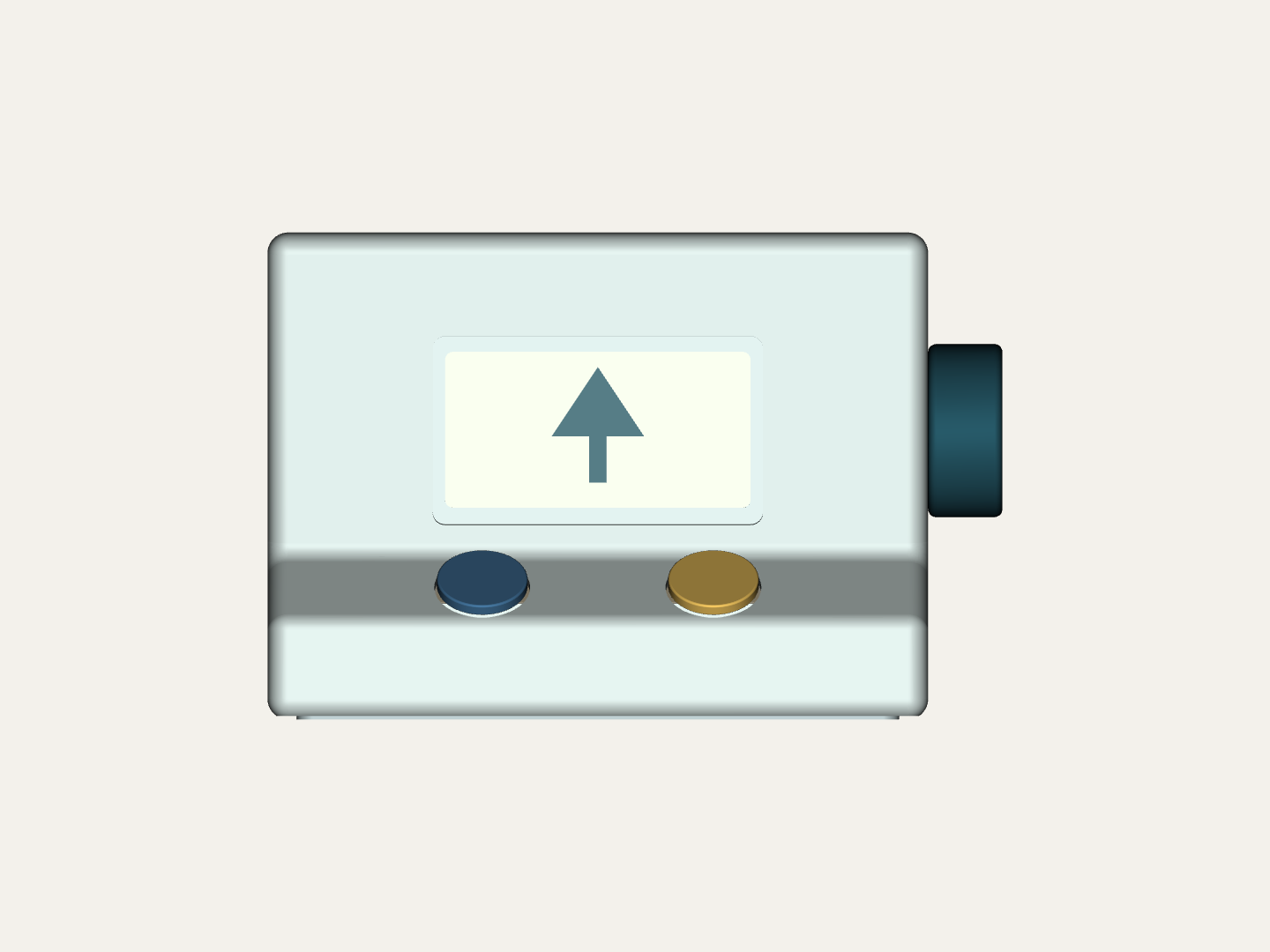
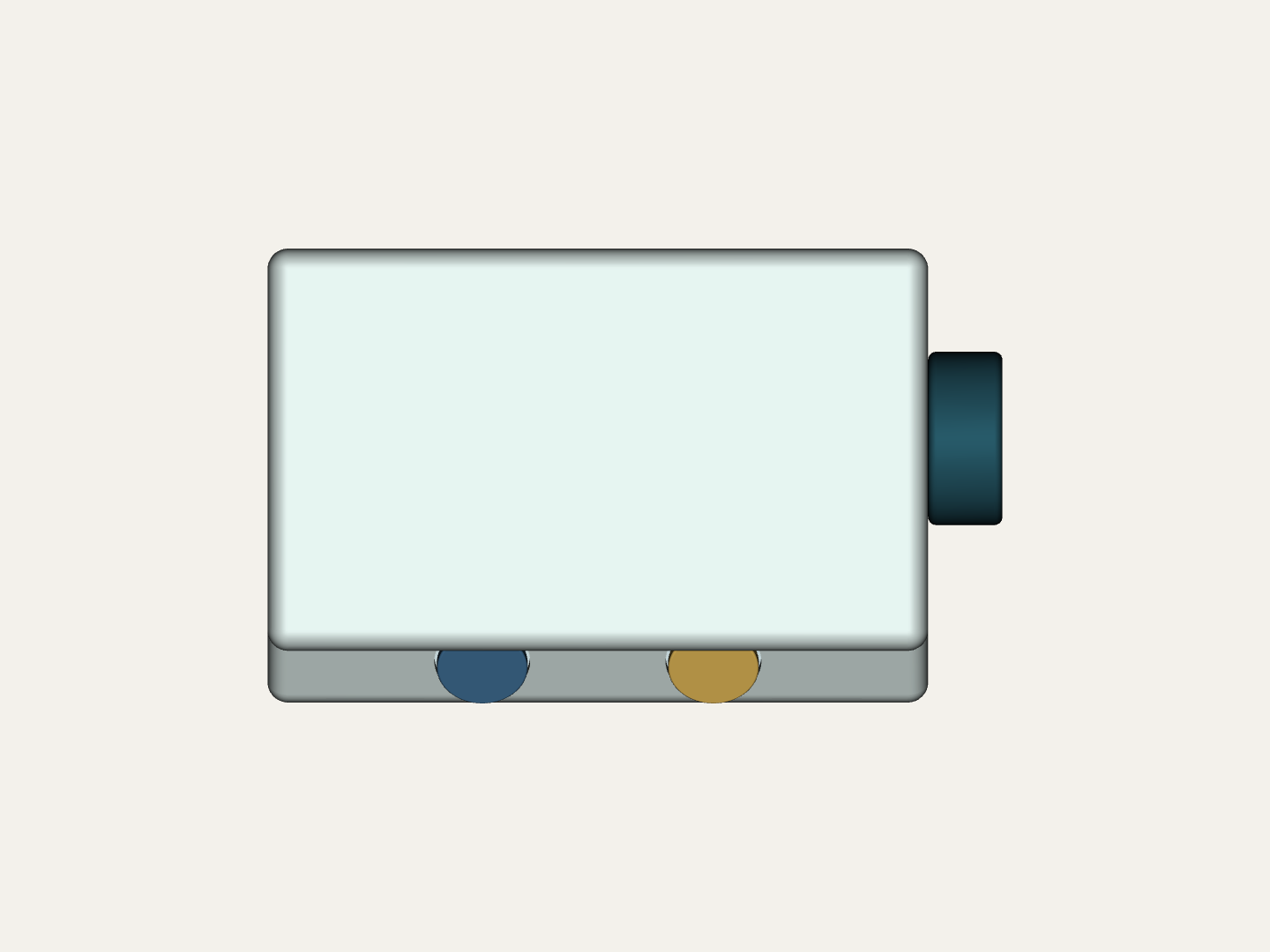
All views are digital concept images, not photographs of a physical prototype.
Proposed design inputs
| Form | Single-piece tabletop picture drum with fixed clear window |
|---|---|
| Picture medium | Six original printed faces, not an electronic screen |
| Position route | Absolute optical index considered; physical feasibility unvalidated |
| Controls | Manual side turn control plus replay/language buttons |
| Indicative envelope | About178W×110D×118H mm including the side control |
| Content limit | Six-face starting point; larger libraries would require a different development decision |
A starting point for your product brief
Choose this direction as a reference, then define what your customers need. These are possible development discussions, not confirmed ready-made options.
Share your requirementsFrom an idea to a development decision
Agree the brief
Define the audience, sales market, intended experience, original content, changes and commercial constraints.
Check the experience
Use simple mock-ups and a full-size form model to assess the proposed task before committing to tooling or custom electronics.
Evaluate feasibility
Review real components or mechanisms, power where applicable, usability, structure and market-specific safety requirements.
Decide whether to develop
Agree scope, ownership, budget, prototype stages and validation responsibilities. Tooling and production assessment would be later decisions.
Questions about this concept
Is the window an electronic screen?
No. The recommended concept uses original printed faces on a manual drum behind a fixed clear window.
How does it know which picture is showing?
An internal absolute optical index is a proposed route. Its alignment and reliability still need physical tests; stored incremental counts alone are not the proposal.
Can customers download unlimited new pictures?
No. The six-face printed medium has a real capacity limit. Different content would need an agreed module or architecture change during development.
Is this concept ready to order?
No. It is an original digital concept for review. Feasibility, physical prototypes, tooling, electronics and validation would need a separately agreed development project.
Can it be adapted for our brand or market?
Content, languages, appearance, audience and intended changes can be discussed. Feasibility, ownership, project scope, cost and market-specific safety work would need agreement.
What are the price, MOQ and lead time?
They have not been set. A meaningful quotation requires an agreed specification, prototype scope, feasibility review and supplier assessment.
Would this direction fit your product range?
Share your target market, intended users and changes. Begin with a concept review and a development brief.