

Pattern Pebble Sequence Game Concept
Digital concept · Not physically validated
A compact offline sequence-game concept with six shape-marked light-and-sound buttons around a shared tabletop disc.
26-second rendered 3D concept interaction with English captions. Proposed use only; not footage of a physical prototype.
Watch, listen and repeat a short sequence
Pattern Pebble explores quick, repeatable rounds that a child or family can play around one small object. The proposed MVP generates local tones and sequences without a screen, microphone or account.
Choose a short round
Choose a short round and watch the demonstration.
Watch and listen
Watch and listen as the shape buttons form a sequence.
Repeat the sequence
Repeat the sequence after the input cue.
Replay or share a turn
Try a shorter round, replay or pass the turn.
A shared disc with six shape-marked buttons
Six shape-marked response buttons surround a compact tabletop disc, with a separate start/pause action. Local light and sound cues are proposed. Button reach, cue timing, sound exposure and understandable feedback need user and physical evaluation.

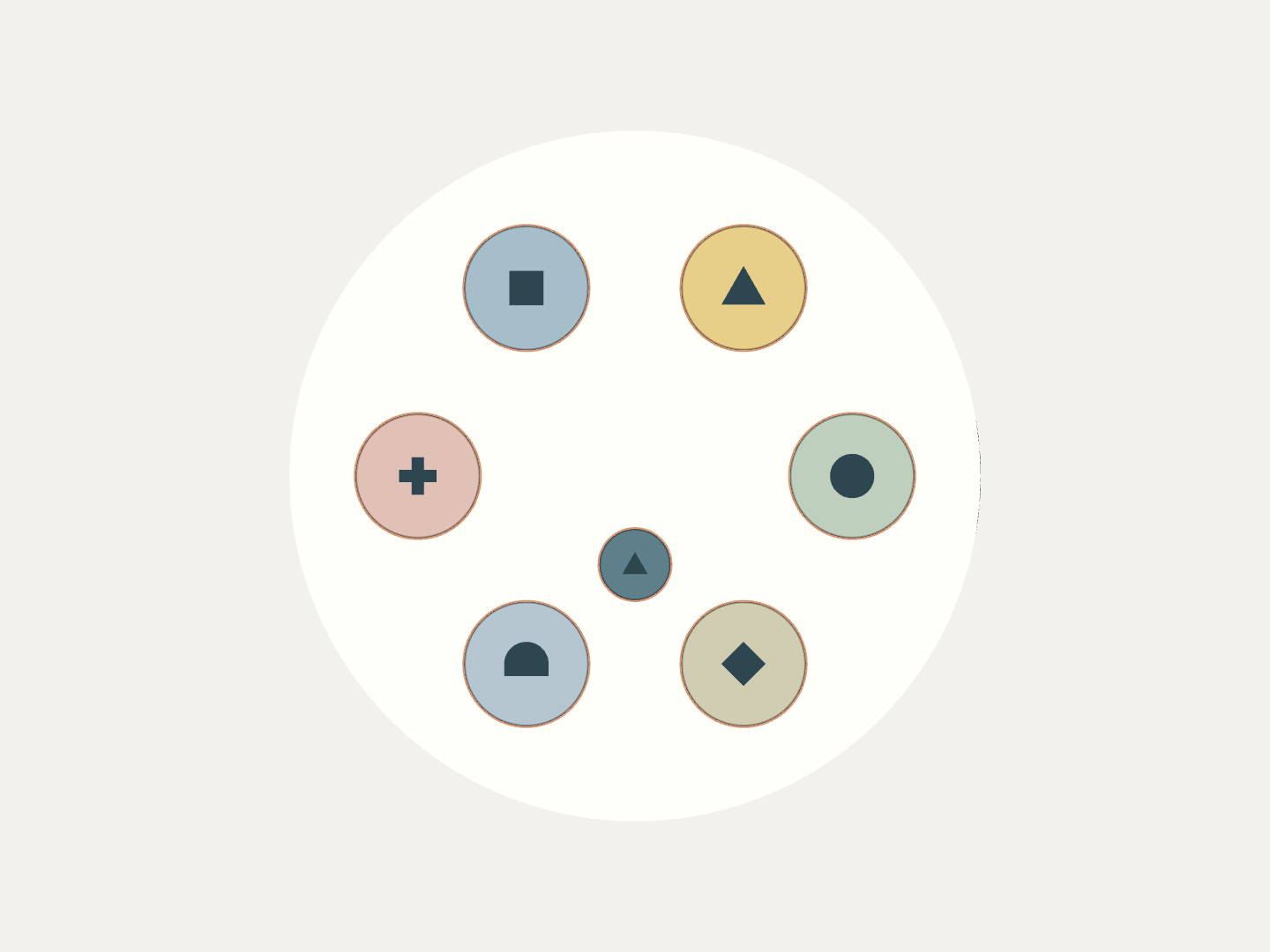
All views are digital concept images, not photographs of a physical prototype.
Proposed design inputs
| Response controls | Six proposed shape-marked response buttons |
|---|---|
| Round control | One start / pause control |
| Feedback direction | Local light cues and speaker-generated tones |
| Proposed first version | No screen, microphone, wireless or personal profile in the proposed MVP |
A starting point for your product brief
Choose this direction as a reference, then define what your customers need. These are possible development discussions, not confirmed ready-made options.
Share your requirementsFrom an idea to a development decision
Agree the brief
Define the audience, sales market, intended experience, original content, changes and commercial constraints.
Check the experience
Use simple mock-ups and a full-size form model to assess the proposed task before committing to tooling or custom electronics.
Evaluate feasibility
Review real components or mechanisms, power where applicable, usability, structure and market-specific safety requirements.
Decide whether to develop
Agree scope, ownership, budget, prototype stages and validation responsibilities. Tooling and production assessment would be later decisions.
Questions about this concept
Is the shown object ready to order?
No. It is an unvalidated product concept for customer discussion, with no mold, PCB or working physical sample.
Does it prove or measure memory improvement?
No. It proposes a sequence game and makes no therapeutic, diagnostic or educational-efficacy claim.
Does it need an app?
No app is proposed for the selected MVP. Tone generation and sequence rules would run locally.
Can the rules or appearance be customized?
Button count, shapes, colors, sound design and turn-taking rules can be discussed. Engineering, content and physical tests remain ahead.
Would this direction fit your product range?
Share your target market, intended users and changes. Begin with a concept review and a development brief.