

Grid Grove Visual Search Board Concept
Digital concept · Not physically validated
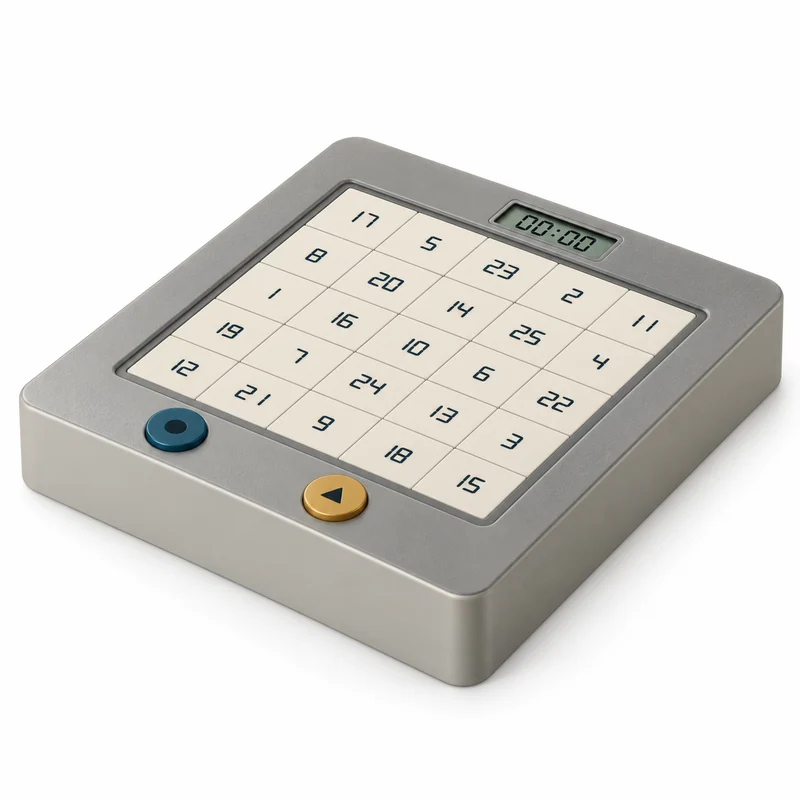
A paper-first visual-search board concept with a full 5 × 5 card area and a simple local timer.
Find a route and compare it together
Grid Grove explores a calm tabletop format for pointing, searching and taking turns. The selected direction keeps the task on a large printed card; the electronics only time the round.
Place a search card
Insert an original printed search card.
Agree a route and begin
Agree on a finding order and start the timer.
Find with a partner
Point to each target while a partner observes.
Finish and compare
Finish manually, compare the route and swap cards.
A full paper card area beside a simple timer
The proposed board preserves a full five-by-five printed search area with a small reflective time display. A partner observes the search and finish is marked manually. Card retention, sight lines, display readability and the timing experience still need evaluation.

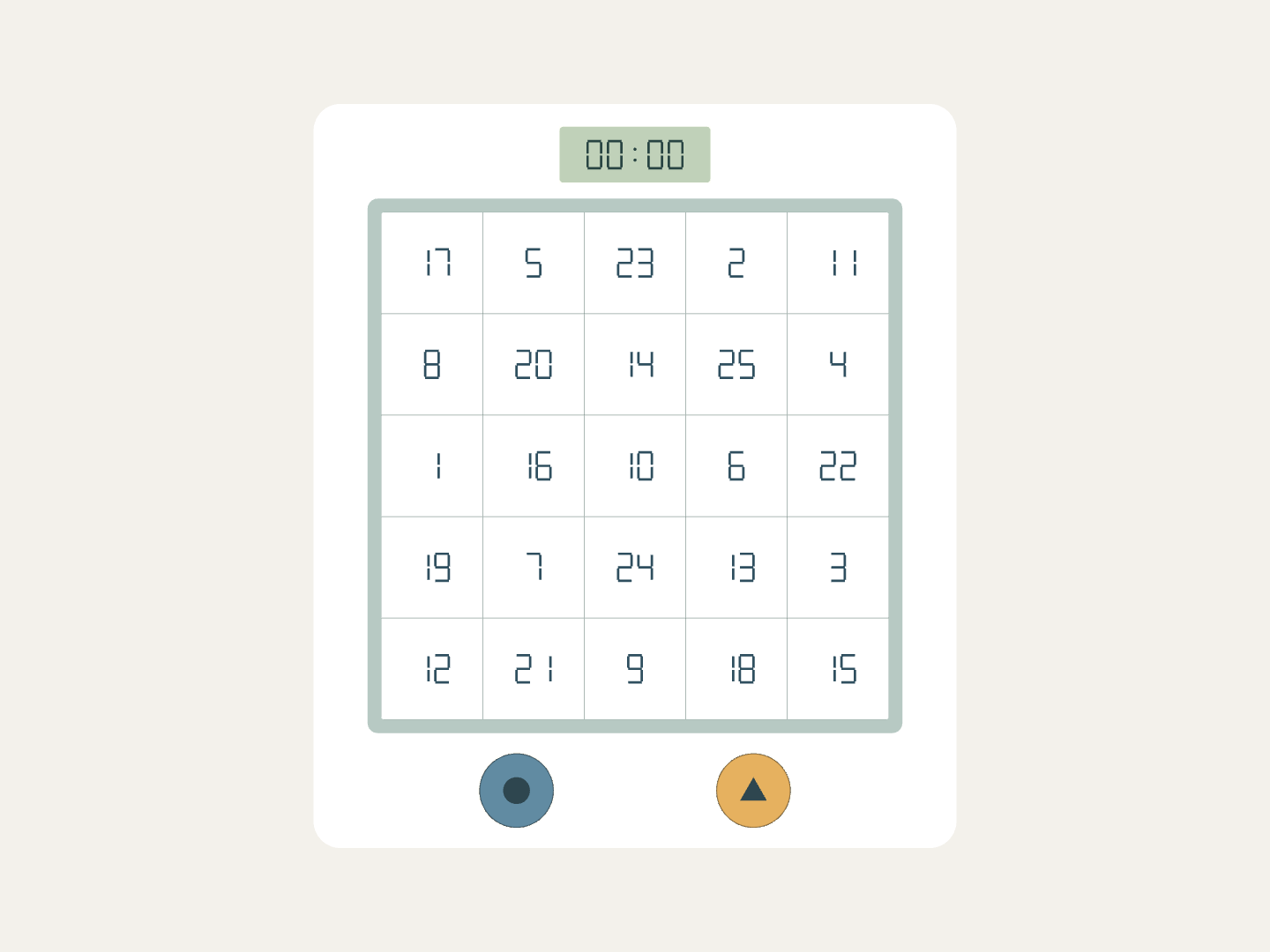
All views are digital concept images, not photographs of a physical prototype.
Proposed design inputs
| Timer controls | Two proposed timer controls |
|---|---|
| Printed-card area | 150 × 150 mm visible printed-card area |
| Display direction | Small reflective elapsed-time display |
| Result judgement | Manual finish and human observation; no automatic answer judging |
A starting point for your product brief
Choose this direction as a reference, then define what your customers need. These are possible development discussions, not confirmed ready-made options.
Share your requirementsFrom an idea to a development decision
Agree the brief
Define the audience, sales market, intended experience, original content, changes and commercial constraints.
Check the experience
Use simple mock-ups and a full-size form model to assess the proposed task before committing to tooling or custom electronics.
Evaluate feasibility
Review real components or mechanisms, power where applicable, usability, structure and market-specific safety requirements.
Decide whether to develop
Agree scope, ownership, budget, prototype stages and validation responsibilities. Tooling and production assessment would be later decisions.
Questions about this concept
Is this a physical prototype?
No. The shown form is a digital product concept. Tooling, electronics and physical validation have not been carried out.
Does it automatically check the search order?
No. A player or partner observes the printed card and ends the timer manually.
Are the cards shown final content?
No. Card artwork and rules are proposed original content for development and review.
Does it measure concentration or learning gains?
No diagnostic or educational-outcome claim is made. The display would show elapsed time only.
Would this direction fit your product range?
Share your target market, intended users and changes. Begin with a concept review and a development brief.