

Echo Trail Listening Game Concept
Digital concept · Not physically validated
An original, offline tabletop listening-game concept with four large, shape-marked response buttons and replay-led turns.
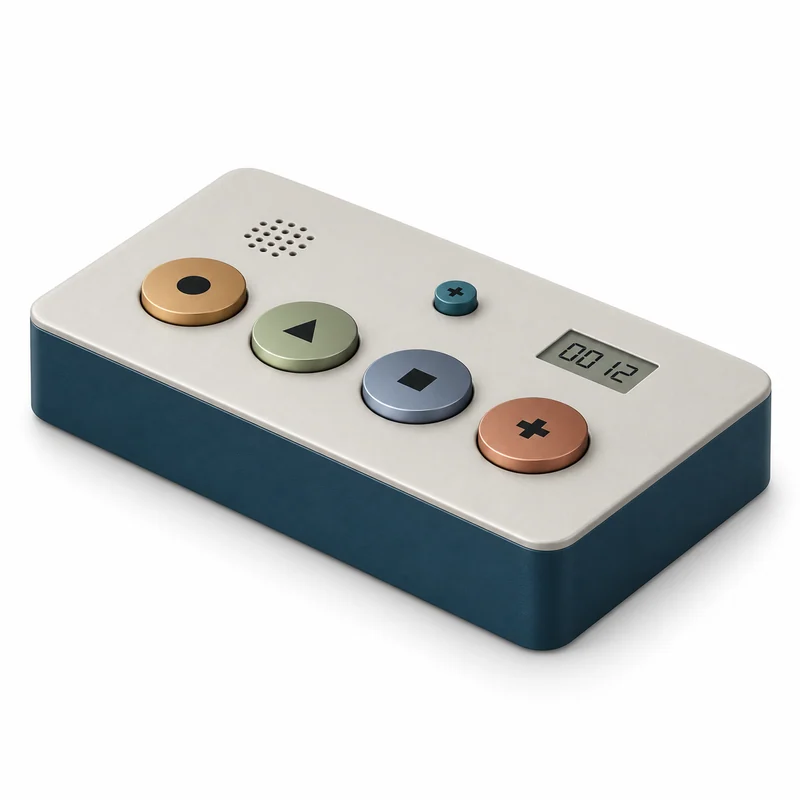
Listen, respond and share another turn
Echo Trail explores a compact shared play surface for listening, responding and taking turns. Proposed cues can be tones, short spoken prompts or simple action instructions; the final content and interaction rules are open for development.
Choose a listening round
Choose a short listening round with an adult.
Listen to the cues
Listen to a small sequence of tones or spoken cues.
Respond with the buttons
Respond using four shape-marked buttons.
Replay or share a turn
Replay, pause or swap turns for another round.
Four shape-marked response buttons
The proposed tabletop body places four large response buttons around a local speaker and small progress display. An adult setup/pause action supports shared turns. Cue content, response timing, hand reach and sound exposure require testing.

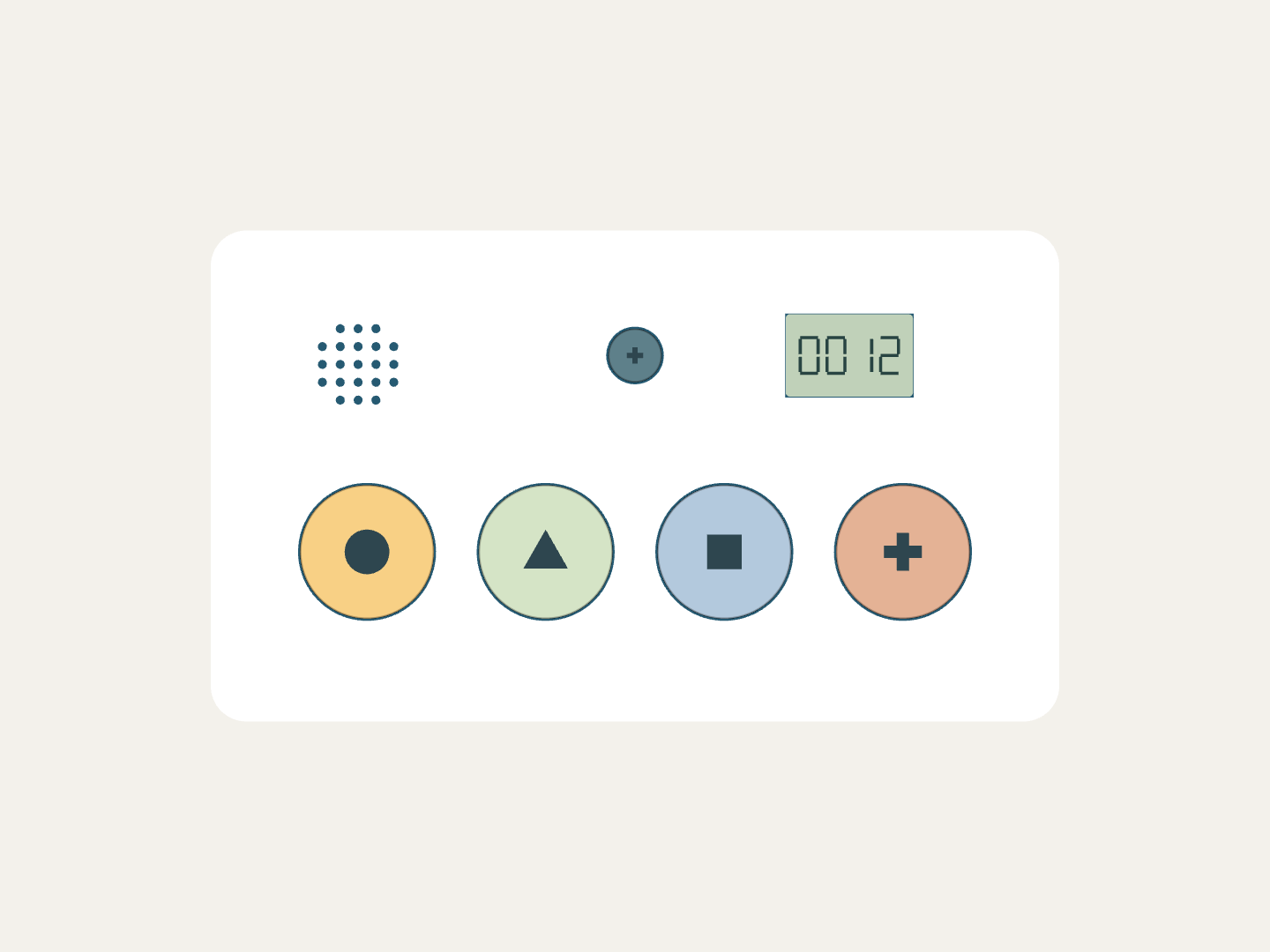
All views are digital concept images, not photographs of a physical prototype.
Proposed design inputs
| Response controls | Four proposed physical response buttons |
|---|---|
| Adult setup | One adult setup / pause control |
| Feedback direction | Local speaker and a small progress display |
| Proposed first version | No microphone, camera, account or wireless connection in the proposed MVP |
A starting point for your product brief
Choose this direction as a reference, then define what your customers need. These are possible development discussions, not confirmed ready-made options.
Share your requirementsFrom an idea to a development decision
Agree the brief
Define the audience, sales market, intended experience, original content, changes and commercial constraints.
Check the experience
Use simple mock-ups and a full-size form model to assess the proposed task before committing to tooling or custom electronics.
Evaluate feasibility
Review real components or mechanisms, power where applicable, usability, structure and market-specific safety requirements.
Decide whether to develop
Agree scope, ownership, budget, prototype stages and validation responsibilities. Tooling and production assessment would be later decisions.
Questions about this concept
Is this a finished or available product?
No. This is an unvalidated product concept for customer discussion. No mold, PCB or working physical prototype has been made.
Does it assess or improve attention?
No assessment or educational outcome is claimed. The proposed product supports a defined listening and button-response game.
Can content or languages change?
Languages and original cue packs can be discussed. Capacity, content licensing and production feasibility require development.
Does it need a phone?
The proposed tabletop MVP operates locally. A phone-based alternative was explored separately and is not the selected direction.
Would this direction fit your product range?
Share your target market, intended users and changes. Begin with a concept review and a development brief.